



Disclaimer: This article is intended for industry professionals and provides general educational information only. It does not promote specific products or constitute medical advice.
Introduction
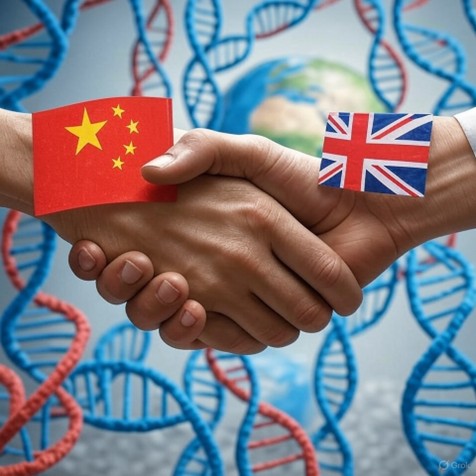
The global pharmaceutical landscape is undergoing rapid transformation, with Chinese biopharma companies emerging as major innovators and highly sought-after partners for international collaborations. In 2025, out-licensing deals from Chinese biopharma firms are projected to account for 37% of all large-company licensing transactions – demonstrating China’s rapid ascent as a source of cutting-edge therapeutics.
This shift is not just reshaping the global drug development landscape – it is also opening new avenues for UK enterprises in joint ventures, technology transfer, regulatory alignment, and market expansion. For UK companies, engaging with Chinese out-licensing enriches innovation pipelines while leveraging China’s unique scale, speed and technical prowess
Understanding Out-Licensing from China
Out-licensing occurs when a Chinese biopharma company grants rights to its internally developed drugs, technologies, or intellectual property to an overseas partner for further development, manufacturing, and commercialisation in selected regions. This collaborative model offers clear mutual benefits:
- For Chinese firms: Access to international Markets, new capital, and global recognition.
- For UK partners: Cost-effective innovation, differentiated products, and risk-sharing in R&D investment.
Why It Matters for UK Firms
- Pipeline Enrichment: Gain access to breakthroughs in oncology, immunology, and gene editing- often at earlier development stages and lower costs.
- Accelerated Market Entry: Leverage China’s efficient and large-scale trial infrastructure, with growing regulatory alignments enabling faster UK/EU approvals.
- Resource Synergies: Shared clinical, data, and regulatory resources, complementing UK’s leadership in foundation research, regulatory science, and commercial acumen.
Key Drivers of Growth in Chinese Out-Licensing
Several factors underpin the surge in out-licensing and broader UK-China collaboration:
- Innovation Capacity: Major advances in cancer, immunotherapies, and next-generation modalities (especially antibody-drug conjugates and cell therapies) and increasingly entering global trials and attracting interest from Western pharma.
- AI/ML Proliferation: China’s deep investments in AI-driven drug discovery (from molecule screening to autonomous lab platforms) offer UK firms a chance to access and co-develop next-gen digital pipelines.
- Regulatory Alignment: China’s NMPA continues to harmonise its processes with international standards, including expanded use of real-world evidence and electronic submissions, resulting in smoother overseas approvals.
- Cost Advantages: Clinical trials in China are typically quicker and more affordable, a major draw for the UK biotechs and pharma coping with budget pressures.
- Patent Pressures: As major global firms confront shrinking pipelines due to patent cliffs, Chinese innovation provides valuable new asset streams
UK-Specific Regulatory Frameworks: A Tailored Advantage
MHRA’s Innovative Licensing and Access Pathway (ILAP)
Revamped in 2025, ILAP offers a modern, end-to-end pathway for transformative medicines. Chinese assets can benefit from early engagement, streamlined approval processes, and direct patient input- all supporting faster market entry. Example: Shanghai Henlius Biotech’s anti-PD-1 mAb (hansizhuang) received an ILAP Innovation Passport in 2024, enabling expedited MHRA review and the potential early patient access in the UK.
NICE Guidance and Reimbursement
NICE’s Technology Appraisals and Highly Specialised Technologies programmes are designed to fast-track innovative therapies with high unmet need. Chinese-origin drugs, such as toripalimab from Shanghai Junshi Biosciences, are undergoing NICE appraisal post-EMA approval, creating clearer reimbursement pathways and broader MHS access for advanced immunotherapies.
Bridging Chinese AI and UK Agentic AIML Capabilities: Pathways to Deeper Collaboration
As biopharma innovation becomes increasingly data-driven and autonomous, the integration of Chinese AI- renowned for rapid development, scale, and application- with the UK’s expertise in agentic AI/ML (AIML)-noted for safe, regulatory-compliant and self-directing systems- represents a unique global opportunity.
How Can We Bridge These Strengths?
- Joint AI R&D Ventures:
- Establish bilateral R&D centres focused on co-developing agentic AI platforms for drug discovery, autonomous clinical trial design, and adaptive manufacturing.
- Support shared “Self-driving labs” using China’s high throughput and the UK’s regulatory alignment and safety protocols.
- Talent and Knowledge Exchange:
- Launch fellowships, exchange programmes, and collaborative PhD projects to transfer AIML skills and methodologies between innovation hubs such as Shanghai, Beijing, Cambridge, London, and other key centres in the UK, China, and internationally.
- Regulatory and Data Sharing Sandboxes
- Pilot regulatory sandboxes enabling UK and Chinese experts to test agentic AIML applications in rea-life healthcare and clinical data environments, addressing issues from data privacy (GDPR/Chinese law) to algorithmic transparency.
- Innovation Hubs and Demo Projects:
- Looking ahead, innovation parks in Wuxi and other top-tier Chinese cities are poised to play a growing role in supporting collaborative initiatives between Chinese and international partners—including, potentially, EFEC—should relevant opportunities arise.
- Commercial Partnerships Leveraging Dual Infrastructure:
- Encourage UK AI startups and SMEs to scale validated agentic AI healthcare tools in the Chinese market using Chinese partners’ resources, and vice versa.
Case in Point:
The 2025 AstraZeneca-CSPC agreement, valued up to $5.3 billion, explicitly integrates Chinese digital drug-discovery platforms with AstraZeneca’s AI teams, exemplifying real-world synergy.
Opportunities in Broader UK-China Out-Licensing Collaborations
- Joint Ventures as a Strategic Pathway: UK companies increasingly form joint ventures with Chinese partners to co-develop and commercialise drugs, tapping into China’s large patient populations and advanced manufacturing. Recent partnerships in oncology, digital health, and advanced therapies have exceeded £250 million in value.
- Technology Transfer and Co-Development: Many out-licensing agreements include technology transfer and co-development arrangements, enabling UK firms to adapt Chinese innovation for European registration, while offering China UK expertise in regulatory and Intellectual property standards.
- Opportunities for SMEs and Innovators: UK small and medium-sized enterprises (SMEs) and university spinouts can benefit from Chinese investments and licensing deals. Platforms like the Wuxi International Life Science Innovation Park and UK-China BioPharma Funds making these partnerships increasingly accessible.
Recent UK-China Biopharma Deals: A Snapshot
| Deal Partners | Year | Value | Focus Area | UK Benefit |
| AstraZeneca & CSPC Pharmaceutical Group | 2025 | Up to $5.3 billion | AI-driven small molecule therapies | Pipeline boost in chronic diseases; leverages UK’s AI expertise. |
| GSK & DualityBio | 2024 | Potential >$1 billion | Antibody-drug conjugates (ADC) | Oncology advancements; access to China’s ADC innovations. |
| LEO Pharma & Shanghai Junshi Biosciences | 2025 | Not specified | Toripalimab commercialisation in UK/EU | Expanded immunotherapy options; regulatory alignment via distribution rights in up to 32 countries. |
| Shanghai Henlius Biotech & MHRA ILAP | 2024 | N/A (Regulatory) | Anti-PD-1 mAb (hansizhuang) | Faster UK access via Innovation Passport. |
UK Stakeholder Perspectives: Case Studies and Insights
To illustrate real-world impact, consider feedback from UK biopharma leaders on Chinese collaborations:
- Case Study: AstraZeneca’s Ongoing Partnerships: As noted by AstraZeneca CEO Pascal Soriot during meetings with Chinese leadership in 2025, “Our collaborations with Chinese innovators are essential for advancing global health solutions amid evolving challenges.” This reflects how deals like the CSPC agreement enhance UK pipelines.
- SME Insight: A Cambridge-based biotech executive shared at a BioIndustry Association event: “Partnering with Chinese firms has accelerated our R&D by providing access to diverse clinical data and cost efficiencies, transforming our approach to global trials.” (Anonymised from industry reports on UK-China ties. )
These examples underscore the transformative potential for UK firms.
Navigating Challenges in UK-China Collaborations
While promising, collaborations face hurdles:
- Intellectual Property Safeguards: Robust agreements needed to protect UK innovations.
- Regulatory Compliance Variations: Differences like GDPR vs. China’s data laws require due diligence.
- Geopolitical Considerations: Trade tensions may impact structures; flexible frameworks are key.
Mitigation Strategies
Engage specialist intermediaries with UK-China expertise (such as EFEC, which leverages networks with law firms, investors, and regulators for end-to-end support). UK law firms including Mills & Reeve have extensive experience in guiding cross-border life sciences transactions.
Outlook for 2025 and Beyond
UK-China biopharma ties are set to deepen, with out-licensing as a cornerstone of globalisation.
Practical Recommendations
- Proactively Seek Partnerships: Attend events like the ChinaBio Partnering Forum 2025.
- Forge Strategic Alliances: Develop models emphasising long-term mutual gains, including financial returns and technology inflows.
- Leverage Expert Assistance: Utilise consultancies familiar with UK-China dynamics to navigate cultural, legal, and operational challenges.
- Staying Ahead in Regulatory and Data Innovation: Monitor and engage in consultations on ILAP, NICE, algorithmic standards, and international data-sharing frameworks.
Conclusion
Chinese biopharma out-licensing is redefining global innovation in life sciences. For UK companies, the dynamic bridge between China’s AI-driven scale and the UK’s agentic AIML ingenuity creates not just access to new assets and markets, but a springboard for next-generation innovation and growth. By championing cross-border AI R&D, data integration, and collaborative commercialisation, the UK can reinforce its leadership in global healthcare for the digital future.