



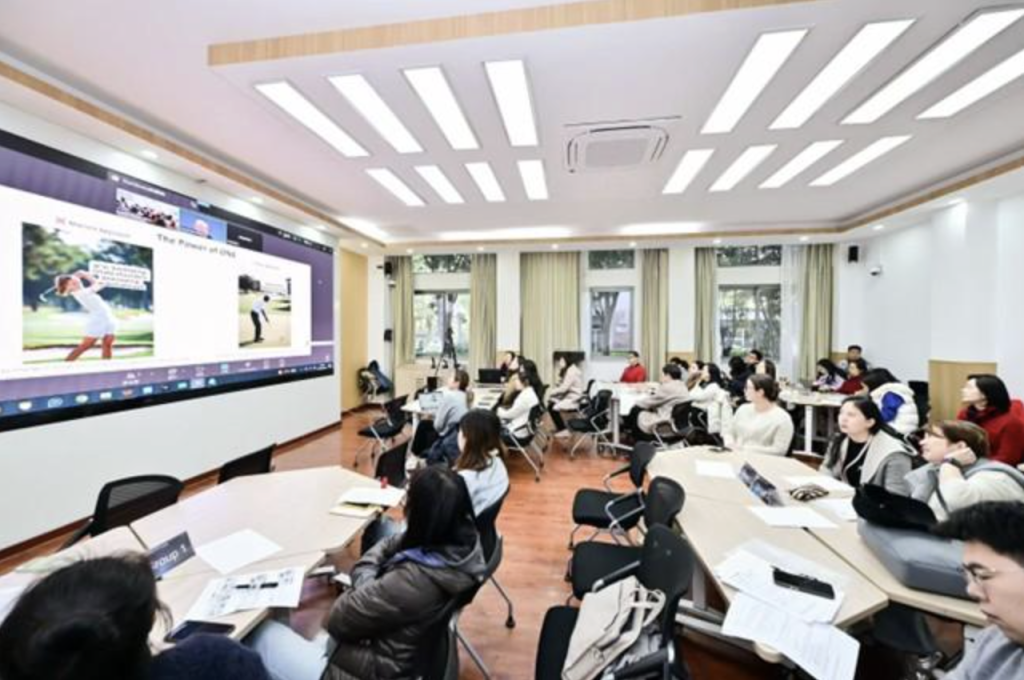
Across education systems worldwide, school leaders face a shared challenge: how to translate reform ambitions into changes that are practical, sustainable and rooted in everyday school life. This question sits at the centre of EFEC’s long-term work across the Yangtze River Delta, where we have spent almost two decades supporting leadership development in partnership with local education bureaus and teacher development institutes.
Our collaboration with the Shanghai Pudong Institute of Education Development (PIED) forms part of this ongoing effort. Together, we are delivering a multi-session leadership programme designed to help school leaders approach innovation in a manner that is human-centred, evidence-informed and manageable in real working conditions. The programme has now entered its fourth phase.
From Ideas to Actionable Practice
Earlier phases of the programme explored three foundational strands of leadership:
- Value rationale – clarifying why change is needed
- Relationship-based leadership – building trust and organisational vitality
- Innovation design – identifying what to change and how
With these foundations established, the fourth session focuses on the most difficult question: How do leaders make change happen in practice?
Many participants described the familiar tension between administrative expectations and the time, relationships and autonomy required for educational improvement. The fourth session introduces a structured action research approach to help leaders engage with this tension and move from insight to implementation.
A Manageable Model for School-Based Innovation
EFEC’s action research model encourages leaders to design and test small, low-risk interventions that can be explored over a six-week cycle. The model emphasises three practical steps:
1. Focus on one specific challenge
Participants choose a manageable starting point relevant to their school’s context.
2. Engage the right people
A stakeholder mapping tool helps leaders identify who will be affected, who may support the work, and how to initiate constructive conversations.
3. Use light-touch evidence
Instead of complex monitoring systems, leaders collect short observations, reflections or brief feedback to understand what is happening authentically.
This structure is intended to make innovation feasible within the realities of school life, allowing leaders to build confidence and insight before scaling more widely.
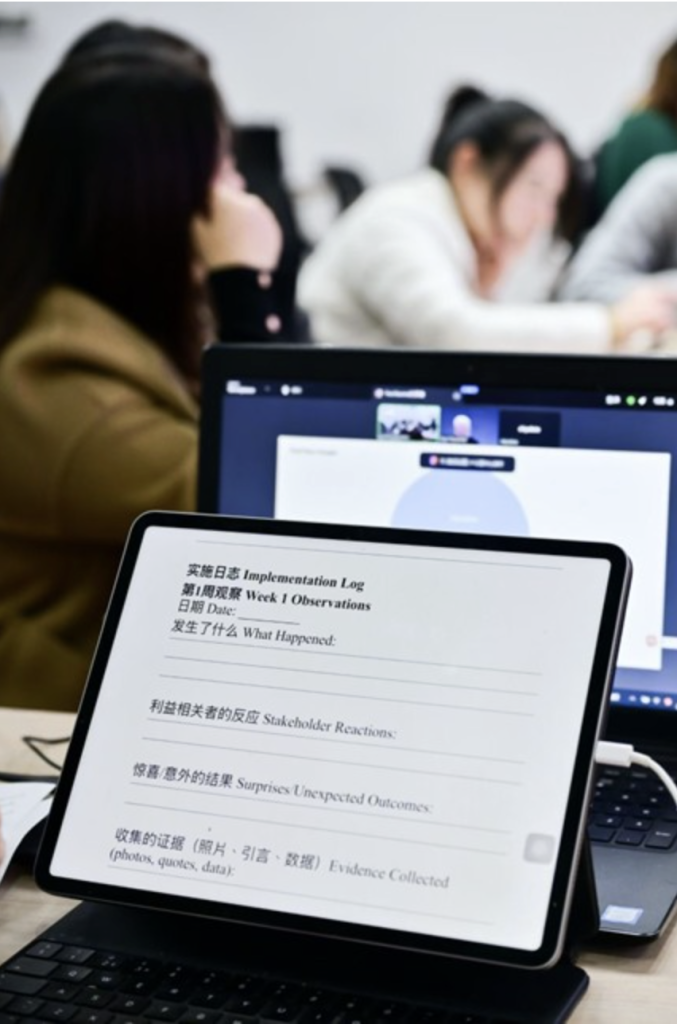
Session Four: From Commitment to First Steps
The fourth session guides participants to produce a clear six-week plan that includes:
- a defined research question
- success criteria
- data sources
- a stakeholder engagement plan
- a week-by-week timeline
- a specific “Week One” action commitment (who, when, where and for how long)
Participants noted that this process made the pathway forward more concrete. By breaking change into specific, time-bound steps, the work feels more achievable and better aligned with their existing responsibilities.

Why This Perspective Is Relevant to the UK
Although this programme takes place in China, the underlying themes are familiar across education systems, including the UK:
- navigating complexity
- protecting teacher agency
- developing cultures of trust
- promoting evidence-informed practice
- designing change that is realistic rather than overwhelming
The Pudong experience offers one additional international perspective on how leaders can support improvement in ways that are structured, thoughtful and human-centred.
Looking Ahead
As school leaders begin their six-week action research cycles, EFEC will continue providing guidance on interpreting early findings and strengthening school-level support structures. Future sessions will focus on consolidating insights and exploring how schools can build longer-term capacity for sustainable innovation.
EFEC remains committed to supporting leadership development that is practical, context-aware and grounded in the lived realities of educators—both in China and in the wider international community.
Disclaimer: The reflections presented here represent EFEC’s independent observations and do not constitute official positions of partner institutions.
Top image: School leaders in Pudong participating in Session Four of the EFEC–PIED leadership development programme.